
November 3 – 28, 2026
Daryl Phillips'
"In A Land Where Time Stands Still"
Opening reception:
Friday, November 6 | 7:30 pm
Show sponsor:

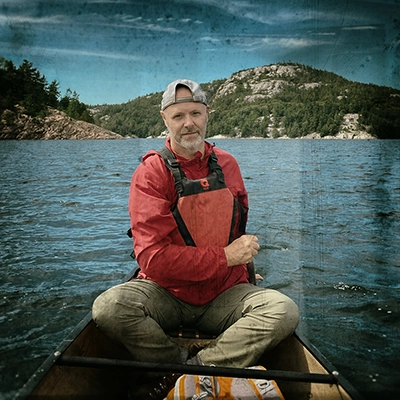
About the artist
The natural world has always inspired Daryl, with its beauty, complexity and its life sustaining qualities—continuously exploring connections between nature and our lives as humans. While wandering through any given landscape, appreciating and discovering every aspect of creation, he is inspired primarily by the elemental and the sculptural aspects of nature. His photographs are an expression of the total visual and emotional experience.
Daryl sums up his continual struggle with photography as art stating, “Photography is one of the technical arts that has always fascinated me. The concept of a creative mind using a machine to construct images has been up for debate since the ‘camera obscura’ was first invented. For us photographers, the challenge is not to copy scenery but interpret elements of a scene and convey meaning and emotion to the viewer – interpretations achieved by the camera’s unique and inherent mechanical qualities.”
His artistic style has been (and continues to be) a journey of discovery and experimentation. As a young artist, Daryl was originally influenced by the Group f/64 (1930’s+) who promoted a style of sharply detailed, purist photography. Over the years he has built and operated pinhole cameras, experimented with photographic collage, almost became a B&W purist, still maintains a love/hate relationship with digital photography and most recently been drawn back to the analogue processes of the early years of photography (1840’s).
Artist statement
In A Land Where Time Stands Still
For the past three decades, I have been canoeing and photographing the Killarney landscape. Apart from a few relics from the days before the Park was established, it seems like the landscape has not significantly changed over the centuries. There has been some deforestation, acid rain and fire, but those ancient hills remain. The shape of those lakes have mostly stayed the same—beaver dams and one human dam have altered some lakes. This environment provides a quiet spot to reflect on the vastness of the land, sky and wate. Here we can contemplate the intricate structures of glittering white quartzite rock, undulating patterns of reflections on water, pink granite rising up out of the lakes or waterways finding their path of least resistance as they flow downstream and over rocks.
Through these photographs, I hope to inspire viewers to appreciate and admire the intrinsic beauty of this landscape that has been left on its own for so many years. Here is one of the few places left that our children—and their children—are able to have the same enjoyment and experience as we did. I’ve already seen the photos and heard the stories. We are still fishing on these lakes, walking the same portage trails, gazing out across the lake at uninterrupted views and sitting around fires on the shores of these majestic lakes. Some of the equipment has changed (lighter & more efficient) and our fashion will identify which decade we were in the park, but the experiences will have been, for us all, much the same—a place of beauty and restoration.
This portfolio of images reflects the joy and excitement I felt each time (over the past 30 years) I canoed the lakes of Killarney and hiked the La Cloche Mountains. The images explore this unique and diverse landscape on both a grand and closeup scale—the big sky views, expanses of crystal clear lakes and rolling mountains, juxtaposed with images that focus on smaller, more intimate details in the amazing rock formations and water reflections.
These photographs—though originally captured in digital format—are printed using a traditional mid-19th century monochromatic printing process called salted paper printing. The key ingredients in this printing process are light, salt and silver. This darkroom process is very labour intensive, requiring much time and effort, akin to the time and effort of the canoe trip to reach my subject matter. This printing technique produces images that last a long time—second only to platinum/palladium prints.