
Alex Jack's
"Landscape Engaged"
December 30, 2025 –
January 31, 2026
Wednesday to Saturday, 11am – 4pm
Opening reception:
Friday, January 2 | 7:30 pm
Sponsored by

Artist statement
The title of my exhibition, Landscape Engaged, sums up my whole approach to drawing and painting the landscape. I'm not interested in describing the landscape as scenery, as something outside of myself, but as something I am a part of. When drawing and painting, both outside and in my studio, the marks i make have to work together as a cohesive whole, where their relationships with each other become equivalents to what I'm seeing and feeling and experiencing. This is more important to me than the marks being just a means of narrative description of the landscape.
I spend more time working in my studio than I do outside, but the core of my approach to my landscape drawings and paintings comes from the time I spend outside and the work I do there. The commitment is to make a unique and strong image wherever I am working. The work done outside is done for itself, not as preparatory studies for the studio work (though a few do end up being used as the starting point for the studio work). The work done outside is based on what I see and feel while outside, the weather and wind, the light and sounds, the immediacy of all the changes in nature. The drawings and paintings are worked and often reworked, sometimes over several days. The studio work develops from the experience of being outside, rather than from individual drawings and paintings that are just made into larger versions of themselves. As with the outside work, the drawings and paintings are worked and reworked, often over several weeks or months. They are attempts to transform and stretch the images and ideas into new territory. In both the outside and studio work I am trying to get an image I could not have foreseen or predicted. The goal, whether outside or in the studio, is always the same: to connect with the ongoing relentless push of nature.
Much of the thinking and many of the questions about landscape come from my particular working process:
How do I know where to look in the landscape? Just because something in the landscape is closer to me doesn't make it more important.
What do foreground, middle ground and distance have to do with the flat surface of a painting? What does the passage of time have to do with a fixed image? What does the dynamic movement in nature have to do with a fixed image?
Why ignore the landscape that is all around me for the sake of the smaller amount of landscape in front of me? The landscape is indifferent to me when I am painting it. When confronted by the largeness and indifference in nature, does a fixed point of view provide some security? Does it provide some comfort to be able to say, "this is where I stood"?
What happens to the vanishing point when no one is there to see it?
About the artist
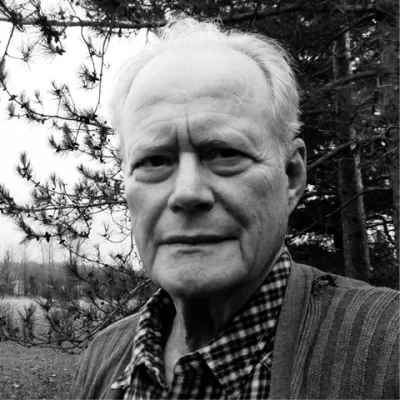
I was born in Toronto and studied art there in the mid to late 1970's at the Three Schools of Art and Central Technical School. I moved to rural Ontario in 1990 to allow more time for working on my art.
I work primarily with landscape, painting and drawing directly in the landscape as well as working in my studio. I have shown in group and solo shows since the early 1980’s. These have taken place in Toronto, and in central and eastern Ontario.